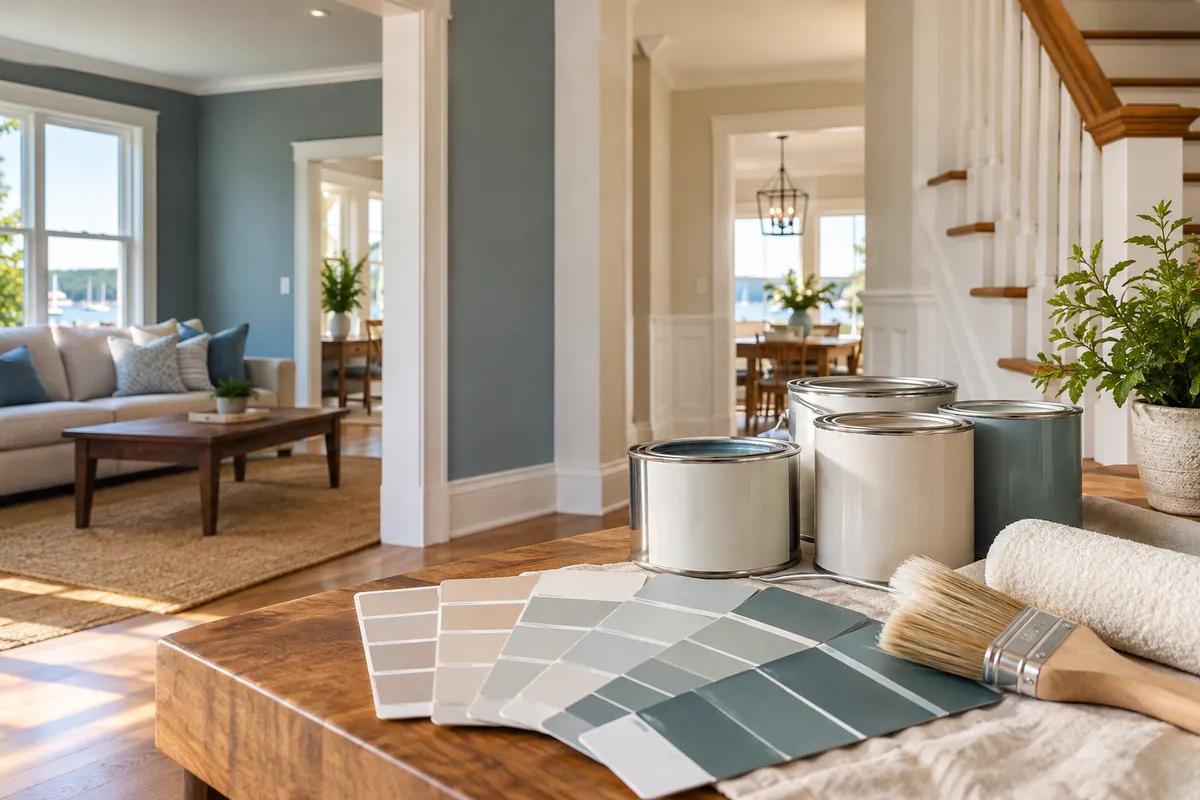
How to Choose the Right Interior Paint Finish for Your Annapolis, MD Home
Choosing a paint color is only one part of planning an interior painting project. The finish, or sheen, you select can also influence how your walls look, how easily they can be cleaned, and how well the paint suits each room.
For homeowners in Annapolis, MD, selecting the right paint finish can help create interiors that look polished while meeting the practical needs of everyday life. A busy hallway may need a different finish from a quiet bedroom, while kitchens and bathrooms often require special consideration because of moisture, frequent cleaning, and regular use.
JW Painting Co. provides painting services for homeowners in the Annapolis area. Understanding the differences between common paint finishes can help you make more informed decisions before your next interior painting project.
What Is Paint Sheen, and Why Does It Matter?
Paint sheen refers to how much light a painted surface reflects. Some finishes appear soft and nearly flat, while others reflect more light and create a noticeable shine.
The finish you choose affects more than appearance. It can influence how visible surface imperfections are and how easily a wall can be cleaned.
For example, a low-sheen finish may help create a subtle, understated appearance, while a glossier finish can be more practical for certain high-use surfaces. However, higher-sheen paints can also make dents, uneven patches, and other wall imperfections more noticeable.
Common interior paint finishes include:
Flat or matte
Eggshell
Satin
Semi-gloss
Gloss or high-gloss
Each option has advantages, and the best choice depends on the room, the surface condition, and how the space is used.
1. Flat or Matte Finish for a Soft, Subtle Look
Flat and matte paints have little to no noticeable shine. They create a smooth, understated appearance that works well in many living spaces.
Because they reflect relatively little light, these finishes can help make minor surface imperfections less noticeable. This can be useful for older walls or rooms where a softer visual effect is preferred.
Flat or matte finishes are often considered for:
Adult bedrooms
Formal living rooms
Ceilings
Low-traffic spaces
Rooms where a muted appearance is desired
The main consideration is cleanability. Some flat paints are more difficult to wash without affecting the finish, although modern washable matte products are available.
If you have young children, pets, or frequently used spaces, check the manufacturer's cleaning recommendations before selecting a flat finish.
2. Eggshell Finish for Everyday Living Spaces
Eggshell has a subtle sheen that falls between flat and satin. It offers a balance between a soft appearance and practical maintenance.
This finish is often suitable for rooms that receive regular use but do not require the more reflective look of a glossier coating.
Consider eggshell for:
Living rooms
Dining rooms
Bedrooms
Home offices
Other moderately used interior spaces
Eggshell can provide a refined appearance without making the walls look overly shiny. Depending on the product, it may also be easier to clean than a traditional flat finish.
However, cleanability and durability vary by paint formulation. If your walls are frequently touched or exposed to marks, ask your painter about the specific product's performance rather than relying on sheen alone.
3. Satin Finish for Busy Areas
Satin paint has a noticeable but relatively restrained sheen. It is commonly considered for spaces where durability and routine cleaning are important.
Depending on the product, satin finishes may be suitable for:
Hallways
Family rooms
Children's bedrooms
Entryways
Certain kitchen and bathroom surfaces
Interior trim or doors when an appropriate product is selected
Because satin reflects more light than eggshell or matte paint, surface preparation becomes especially important. Uneven patches, dents, or rough repairs may be more visible under certain lighting conditions.
Before choosing satin for an entire room, consider how natural light and overhead lighting will affect the walls throughout the day.
For households with active children or pets, a suitable satin product may offer a useful balance between appearance and maintenance.
4. Semi-Gloss for Trim, Doors, and Selected Surfaces
Semi-gloss paint has a more reflective appearance than satin. It is often chosen for surfaces that receive frequent contact or need regular cleaning.
Common applications include:
Interior doors
Baseboards
Window trim
Certain cabinets
Selected bathroom or kitchen surfaces
Semi-gloss can create a clear visual contrast between walls and trim, particularly when paired with a lower-sheen wall finish.
However, its reflective surface can highlight dents, brush marks, and uneven preparation. Proper cleaning, sanding where appropriate, and surface preparation help create a more consistent finish.
The paint must also be suitable for the material being coated. Trim, cabinets, and doors may require different products or preparation methods from ordinary drywall walls.
5. Gloss Paint for Decorative Details
Gloss and high-gloss finishes create a strong shine that can make selected architectural details stand out.
They are generally used more selectively than lower-sheen finishes because their reflective surface can emphasize even small imperfections.
Possible applications include certain decorative trim, accent details, or specialty surfaces where a polished appearance is desired.
Before choosing gloss paint, consider whether the surface is smooth enough to support the finish. Preparation and application technique are particularly important when using highly reflective coatings.
Gloss is not automatically the most durable or appropriate choice for every project. The product's intended use, the underlying material, and the manufacturer's instructions should guide the decision.
6. Match the Paint Finish to Each Room
Rather than using the same finish throughout the entire house, consider how each room functions.
The following guide provides a starting point for selecting interior paint finishes.
Room or Surface | Finish to Consider | Main Consideration |
Bedroom | Flat, matte, or eggshell | Soft appearance and everyday use |
Living room | Eggshell or satin | Balance of appearance and maintenance |
Hallway | Eggshell or satin | Frequent contact and cleaning |
Kitchen walls | Satin or another suitable washable finish | Cleaning needs and product suitability |
Bathroom walls | A moisture-appropriate product, often satin or semi-gloss | Ventilation and moisture exposure |
Interior trim and doors | Semi-gloss or satin | Frequent contact and cleanability |
Ceilings | Flat or matte | Reduced glare and subtle appearance |
These are general guidelines, not strict rules. Paint formulations differ, and some manufacturers offer specialized finishes designed for particular rooms or surfaces.
In kitchens and bathrooms, choosing an appropriate coating is only part of the solution. Proper ventilation and addressing moisture problems are also important for maintaining painted surfaces.
7. Prepare the Walls Before Choosing a High-Sheen Finish
Even the right paint finish can disappoint if the underlying surface is uneven or damaged.
Before painting, inspect walls for dents, nail holes, cracks, peeling paint, and areas where previous repairs remain visible. These imperfections should be evaluated and addressed as needed.
Preparation may involve filling small holes, repairing damaged drywall, sanding uneven areas, cleaning the surface, and applying primer where appropriate.
For more significant damage, drywall repair or replacement may be necessary before painting can begin.
This is especially important when selecting satin, semi-gloss, or gloss finishes because their reflective properties can make surface flaws easier to see.
Homeowners should also consider the room's lighting. Light coming from windows or fixtures at a shallow angle can highlight imperfections that are less obvious under other conditions.
A properly prepared surface gives the selected finish a better foundation and helps the completed room look more consistent.
8. Test Paint Samples Before Making Your Final Decision
Paint colors and finishes can look different depending on lighting, room size, surrounding materials, and the condition of the walls.
Before committing to a full room, test samples when possible. Observe how the color appears in daylight and under artificial lighting.
It can also help to consider how the finish will work with:
Flooring and rugs
Furniture and cabinetry
Window treatments
Existing trim
Natural light
Room size and layout
If you're choosing different finishes for walls, ceilings, and trim, make sure they complement one another.
Discussing these details with a painting professional can help you narrow your options and avoid selecting a finish that does not suit the room's intended use.
Interior Painting Services in Annapolis, MD
The right paint finish can help your home look more polished while supporting the needs of each room. Flat and matte finishes offer a subtle appearance, eggshell provides a versatile option for many living spaces, and satin or semi-gloss may be more suitable for areas that need frequent cleaning.
The best selection depends on the room, the surface condition, the specific paint product, and your household's maintenance needs.
JW Painting Co. serves homeowners in Annapolis, MD, with painting services that can help refresh interior spaces and improve the appearance of your home. If you're planning an interior painting project, consider discussing your room requirements, surface preparation, and finish options before work begins.
Visit JW Painting Co. to learn more about its services and discuss your home's painting needs.
